Thursday, May 22, 2025

The Big Brutal Bill: An Introduction


You might have heard about something called the "One Big Beautiful Bill." The name sounds harmless—maybe even hopeful. But the reality inside its 1,100+ pages is anything but. That’s why I’m calling it what it really is: The Big Brutal Bill.

This legislation is a sweeping overhaul of public life. It slashes healthcare programs, rewrites immigration enforcement (and it not limited to undocumented immigrants), weakens civil rights protections, undermines public education, and strips away environmental rules. It is not about helping families or creating opportunity. It’s about power, control, and profitat the expense of the rest of us.

Much of the bill comes straight from the Project 2025 playbook. This isn’t a conspiracy theory or exaggeration. It's a documented policy agenda, now put into legislative form. The bill’s language is full of vague terms, broad discretionary power, and new enforcement tools that can be turned against communities that are already marginalized.

Over the next few weeks, I’ll break it down section by section. I’ll also write to Senators McCormick and Fetterman each time, with a message that explains why every part of this bill is dangerousespecially for Pennsylvania.

If you’re overwhelmed or unsure where to begin, start with this: The Big Brutal Bill is real. It is moving forward. And we can’t afford to ignore it.

To join me in writing to your senators, you can do that by letter or email or even more easily through Resistbot. 

You can also sign my petition at https://resist.bot/petitions/PJGKPH 


Monday, February 3, 2025

Foreign Aid: More Than Just Charity

I began this blog in 2013 to document my family's experience of planning and fundraising for a church mission trip to Honduras. I went on to visit Honduras 5 more times with the idealism of "making a difference", and over the course of our preparations, our teams became dedicated to the additional ideal of doing no harm. Ensuring our trips didn't contribute to "toxic charity", were not just for us to feel good about ourselves but would hopefully make meaningful long term differences in the lives of the people we were serving. 

With all that in mind, it can't be any surprise to anyone that I am an advocate of governments of
powerful nations providing compassionate aid—food, medicine, or disaster relief—to "the least of these". However, I am not naive enough to ever believe this government aid is entirely altruistic, and it is certainly not a Christian calling they are following. 


And sure, sometimes it is an act of generosity, particularly when a terrible natural disaster hits a country. But the full picture? It’s a lot more complicated. Foreign aid isn’t just about helping people. It’s about shaping the world in a way that benefits the United States.

That might sound cynical, but it’s reality. The US government isn’t writing billion-dollar checks out of the goodness of its heart. It’s making investments—investments in stability, influence, and strategic advantage. 

The Difference Between Personal Giving and Government Aid

Most of us, when we give, do so from a place of compassion. Whether it’s donating to a food bank, sponsoring a child in another country, or tithing through our church, we give because we believe it’s the right thing to do. Maybe it’s faith, maybe it’s morality, maybe it’s just being a decent human being.

But government foreign aid? That’s not coming from the same place. It may do good, but it’s not driven by sympathy. It’s calculated.

Take the example of US aid sending condoms to Gaza. At first glance, it sounds absurd. In a region torn apart by war, was birth control really the priority? But the reasoning behind it wasn’t about compassion—it was about strategy. Reducing unintended pregnancies in an already unstable region could, in theory, lower humanitarian strain and long-term instability. The same goes for US funding of gender studies in parts of Asia and the Middle East. It’s framed as supporting equality, but the underlying goal is often about shaping cultural attitudes in ways that align with American values.

Why Does the US Give So Much?

At its core, foreign aid is about control. Countries that receive US aid are more likely to align with American policies, vote with the US in international organizations, and open their markets to American businesses. And if the US steps back? China and Russia are more than happy to step in.

It’s also about preventing crises before they start. 

When countries collapse—whether from war, poverty, or corruption—those problems don’t stay contained. Instability leads to mass migration, extremist recruitment, and economic fallout that can ripple far beyond the borders of one struggling nation. By keeping certain regions afloat, the US is often preventing bigger problems down the line.

One of the clearest examples of this is education, particularly for girls. Studies have shown that when girls are educated, poverty rates go down, economies improve, and—importantly—terrorist recruitment drops. A 2018 World Bank study (1) found that increasing girls’ education in fragile states significantly reduced the likelihood of conflict. Groups like Boko Haram in Nigeria specifically target girls' schools because they know that an educated population—especially one where women play a role—threatens their control.

So when the US funds girls' education programs in Afghanistan, Pakistan, and parts of Africa, it’s not just about helping. It’s about long-term strategy. The hope is that educated girls grow into women who contribute to more stable societies—societies that are less likely to fall into extremism or violent conflict.

Follow the Money

A lot of foreign aid isn’t even leaving US borders. Much of it comes with conditions that require countries to buy American goods, hire American companies, or adopt economic policies that benefit the US. This isn’t new—it’s been a strategy since the post-WWII Marshall Plan, when the US helped rebuild Europe not just out of goodwill, but to create stable trade partners and prevent the spread of communism.

Foreign aid builds business opportunities. It builds alliances. And it builds leverage. That’s why it’s rarely cut, no matter who’s in office.

So Why Shut It Down?

That’s why the sudden closure of the USAID website, employees being told to stay home, and the agency being described as "a ball of worms" is so concerning. It raises a question that should matter to every American—especially those who benefit most from global stability. Why would the world’s richest man, someone whose wealth depends on international trade and a functioning global economy, fail to understand the value of foreign aid?

Because if USAID is messy, if it's inefficient, then the answer is to fix it—not to shut it down. The US has used aid as a tool for influence and control for decades, and abandoning it doesn’t mean the world stops needing it. It just means someone else—China, Russia—steps in to fill the void.

More Than Meets the Eye

None of this means foreign aid doesn’t do good. It absolutely does. It feeds people, provides life-saving medicine, and rebuilds communities after disasters. But it’s not pure altruism. It’s an investment—one designed to serve a much bigger purpose.

So, the next time someone suggests cutting foreign aid to save money, it’s worth asking: at what cost? Because in global politics, when one country steps back, another steps forward. 


Sources:
(1)  2018 World Bank study "Missed Opportunities: The High Cost of Not Educating Girls 
https://www.worldbank.org/en/news/press-release/2018/07/11/not-educating-girls-costs-countries-trillions-of-dollars-says-new-world-bank-report 

[Images were created by AI]

Sunday, February 2, 2025

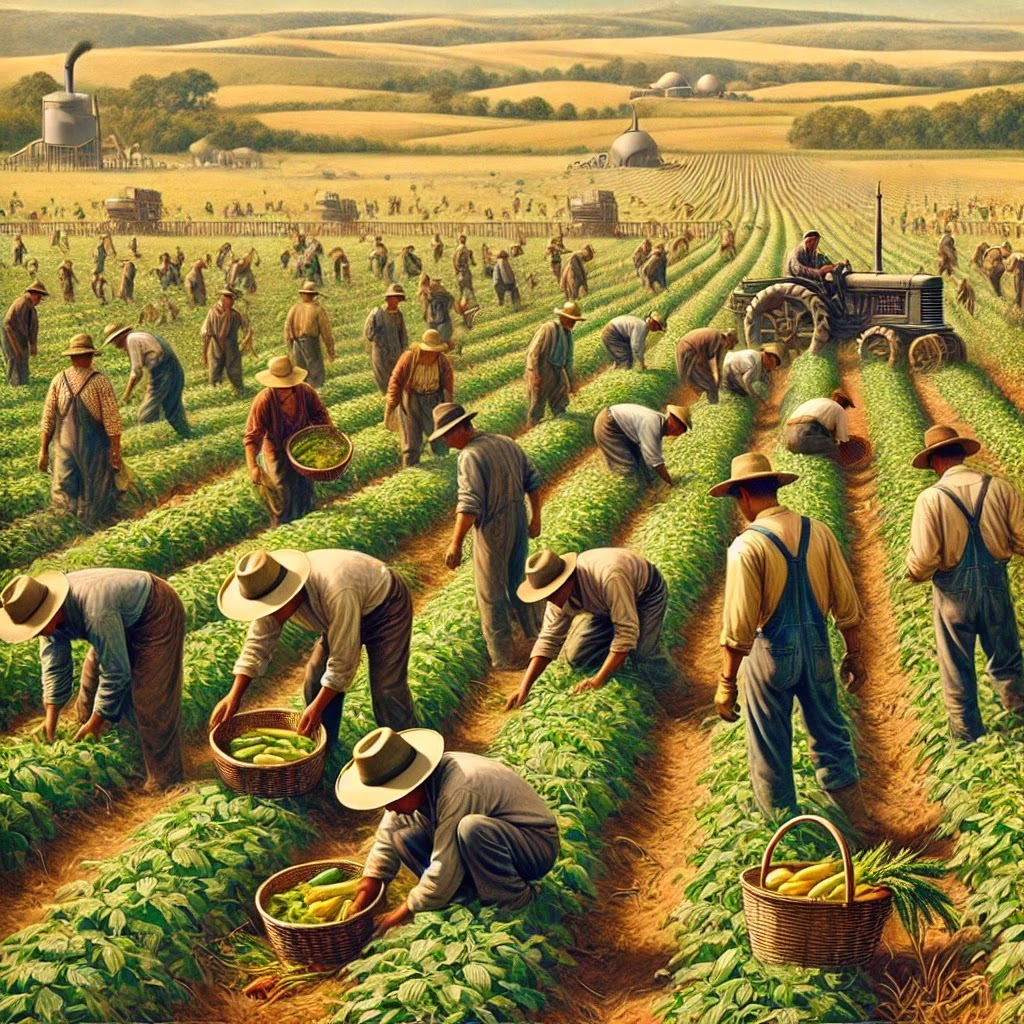
How to Prepare for the Impact of Farm Policy Changes

How to Prepare for the Impact of Farm Policy Changes

Farmers across the country are facing significant challenges due to recent policy changes. In addition to uncertainty surrounding grants and loans, two major shifts are making it even harder for them to stay afloat:

  1. Tariffs and Trade Issues – We can expect an impact either in the cost of food or the tax-payer subsidies to farmers. During the 45th administration, tariffs led to reduced international purchases of U.S. agricultural products. This caused financial losses for farmers, and the government had to step in with hundreds of millions in extra subsidies to offset the damage.
  2. Executive Order on Inflation Reduction Act – Last week, the 47th administration signed an executive order modifying the Inflation Reduction Act, cutting climate-related grants that helped farmers manage flooding, erosion, drought, and irrigation needs.

Why This Matters

Farmers in the Midwest and around the nation are under extreme distress. According to PBS and
multiple other sources, the suicide rate is highest among farming populations due to financial pressures, physically demanding labor, unpredictable crop yields, and limited access to mental health services.

Additional pressures are expected due to:

  • Increased ICE raids, which could further disrupt the agricultural workforce.
  • Tariffs on food imports from Mexico and Canada, which may drive up grocery costs and reduce available food supplies.
  • Retaliatory tarriffs on our agricultural goods will impact them further.

What Can We Do?

Contact Your Representatives

One of the most effective ways to push back against harmful policies is to contact your federal and state representatives.

  • Urge Congress to reinstate climate grants that help farmers adapt to extreme weather conditions.
  • Encourage state legislators to ensure that your state's farmers still have access to critical funding.

Find your representatives here:


Prepare for Food Supply Disruptions

Whether you're new to growing food or looking to expand your skills, now is a good time to prepare:

Learn to Grow Your Own Food

  • A book my husband loved when he began our little homestead 20 years ago was "Country Wisdom and Know How" and has been republished in 2017 with up to date information and resized to fit on a shelf! As much as I love an ebook, this is one of those references I do recommend as a real book. 
  • Join a Master Gardener Seed to Supper program, which offers low cost (free for certain income levels) courses on basic gardening skills. In my area, Butler County Extension will host one this spring.
  • Consider container gardening or raised beds if you have limited space or even ask neighbors if you can use a plot of their land for free or a small fee. 

Preserve Your Food

  • Learn to can, dehydrate, and freeze-dry produce to store for the long term.
  • Look into food preservation classes at your local extension office or community center.
✅ We love our chickens, and thankfully, not every HOA or township has banned keeping them in every neighborhood. Raising backyard chickens is a great way to ensure a steady supply of fresh eggs and, in some cases, meat. They also provide excellent compostable material in the form of manure and help control pests in the yard. 

If you’re new to keeping chickens, Backyard Chickens has a ton of information on budget-friendly coop setups and how to care for your flock:


Stock Up on Long-Term Food Storage


Final Thoughts

These policy changes will have long-term consequences for food security, pricing, and farming communities. We can support our local farmers, push for smarter policies, and take proactive steps to make sure our own households are prepared for whatever comes next.


[Images created with AI]

Saturday, February 1, 2025

The Shifting Ground of Immigration

 The Shifting Ground of Immigration

Laws Change. That’s What Makes Immigration Insecure.

Immigrants know that laws can change. It’s what makes being an immigrant a little insecure. One can be perfectly legal and on the path to citizenship when something shifts.

To be fair, I’ll share an example from the Biden administration: at one point, a new rule required citizenship applicants to provide proof of having received the COVID vaccine. (When I moved here in 2003, I had to prove I didn’t carry tuberculosis—the law evolves.)

Why I Chose to Apply for Citizenship in 2015


I applied for my citizenship in 2015. There were several reasons that particular timeframe mattered to
me. Initially, I’d planned to do it between 2017 and 2018—when my existing green card was up for renewal and before my daughter turned 18, so she could legally gain citizenship with me.

But 2015 was also a moment when the political landscape shifted. At the time, there were still many Republican candidates in the primary race. Trump talked endlessly about immigration, and it wasn’t just about people crossing the border illegally. It was also about Syrian refugees.

Some of you may remember—some of you may have been among those who posted quite vehemently that they were not welcome. Some people I knew weren’t shy about the racial slurs they used toward them.

Trump’s Rhetoric and the Fear It Created

Trump spoke about changing immigration laws—who was "legal" and who was not. At the time, many people were still laughing at him. Even some who would later vote for him admitted how awful he was.

But people like me—people whose lives could change with a stroke of a pen—weren’t laughing. We were afraid.

Someone once said to me,
“You don’t have to worry. He doesn’t mean people like you.”

People like me? White? English-speaking? Christian? I fit in with the social norms, so I’m okay?

But Syrian refugees weren’t illegal, so the adage “We only mean illegal immigrants” didn’t hold up.

You can’t claim it’s only about illegal immigration when you’re freaking out over legal Middle Eastern immigrants. There’s more at play here, whether you admit it or not.

Legal Today, Illegal Tomorrow?

So why did I apply for citizenship in 2015? Because I knew there was a risk.

I feared Donald Trump, and I feared people who spoke out of both sides of their mouths. Would they stand up for me if a law changed and suddenly my visa was no longer valid?

Very doubtful.

A Constitutional Right Under Attack

Today, I watch with horror as a long-held constitutional right to citizenship is being deeply attacked—birthright citizenship.

If that can be taken away without the checks and balances woven into the fabric of the Constitution, then you can be damned sure any other right can be, too.

Any.

For me, having a “safe” green card wasn’t safe enough anymore. I became a citizen in 2015 because I didn’t trust Trump, even before he was the candidate.

It turns out, I was right not to trust him.

Who Will Stand Up When Legal Becomes Illegal?

And today, I feel betrayed by the many people who cheer these law changes.

I feel betrayed by former church friends who smile and say,
“It’s only the illegals.”

But when the laws shift and legal suddenly becomes illegal, you’ll say it’s all for the greater good.

Or am I wrong?

Will you stand up for us when proposed changes outlined in Project 2025 are rolled out?

You’ll tell me,
“But Danielle, it’s the law. I have to report the broken law.”

And I wonder—when did you lose your empathy? When did you lose your love for the least?

The Least Among Us

As I’ve said before, the least doesn’t always mean those without money or a home.

It also means those without legal protection, without hope, without job security.

But in return, you, too, have lost something. More than you realize.

Compassion.
Understanding.
Love.

So I pray that today, you are blessed—with a deep sense of compassion, justice, kindness, hope, and reality.


What Do You Think?

How do you feel about the way immigration laws can change overnight? Have you or someone you know been affected by shifting policies?

Let’s talk about it in the comments. I welcome open, honest, and respectful conversations.

If this post resonated with you, consider sharing it. The more we discuss these issues, the harder it becomes for those in power to quietly erode rights that affect real people.

Friday, January 31, 2025

The Fire That Burns Without Consuming: Activism, Empathy, and Resilience

When I started this blog in 2013, my guiding scripture was Matthew 25:40: "Truly I tell you, whatever you did for one of the least of these brothers and sisters of mine, you did for me." That hasn’t changed. If anything, it’s become more urgent.

Right now, the least of these includes all the people it always has—the poor, the marginalized, the vulnerable, and the downtrodden. But today, it feels like the category has expanded exponentially. When rights are stripped away, when entire groups are pushed back into oppression and 60-year-old protections are written out of the law, we are surrounded by the suppressed. And for those of us who see it, who feel it deeply, it’s impossible to look away.

The America I Thought I Knew

Before I moved to America in 2003, I believed that Americans had it all. Sure, I knew there were problems—poverty, homelessness, political tensions—but I had this idea that at its core, America was a land of security and opportunity. Where people felt a depth of patriotism that meant people fought and worked to make the country better for all. The country that, for all its faults, still believed in fairness.

There were a few things that rocked my beliefs. The shock of the expensive medical system hit me first. I still remember the first time I saw a hospital bill—you mean people actually go bankrupt just for getting sick? They lose insurance when they lose their job—and they can lose their job due to sickness??

Then came the moments of overhearing casual racism spoken so freely, like it was nothing. Someone used a racial slur in front of me without batting an eye, assuming I'd naturally agree with them. And the women’s rights issues—especially in the workplace—felt like something from another era compared to what I was used to in Europe.

But over the past 20 years, I’ve also watched real progress. Tangible progress. Laws demanding equal pay for equal work. Stronger protections against workplace discrimination. A growing recognition that diversity in higher education isn’t just some feel-good ideal—it actually benefits society.

So how is it that now, in 2025, I’m watching these hard-won gains be unraveled?

What Happens When the Floor Drops Out?

I used to believe that even if things got bad, the core of who we are as a country—the foundation of democracy, of basic decency—would hold. I don’t know if I believe that anymore. Or at least, I no longer take it for granted.

People I once thought loved America deeply—loved the ideals of freedom, equality, and justice—have shocked me. It turns out, they love a man much more. And as he tears at the fabric of the Constitution, stretching it beyond its limits, testing who will actually stop him, I feel something tearing at my own soul as well as that of the nation, and at the morals of people I once admired.

Because it isn’t just a political crisis. It’s a moral one. A spiritual one. It’s about who we are as a nation, but also who we are as neighbors, as friends, as coworkers. And as activists.

The Burden of Seeing Clearly

I know I’m not alone in feeling the weight of this moment. The exhaustion doesn’t just come from fighting—it comes from witnessing. From seeing the truth while others deny it. From feeling like you’re screaming into the void while so many around you pretend nothing is wrong.

Empathy has always been a double-edged sword. It’s what calls us to action, but it’s also what makes this all so heavy. How do you keep going when it feels like the same battles must be fought over and over? When the same warnings go unheard? When justice never seems to arrive in time—or worse, when it feels like justice has walked out building and might not be back?

Holding the Fire, Not the Ashes

I don’t have an easy answer. But I do know this: I refuse to let the fire die. Not because I have endless energy, not because I’m some unwavering source of hope, but because letting it go out isn’t an option. Letting this happen is. not. an. option.

So we do what we can to keep going. We rest when we need to. We lean on each other. We grieve, because there is grief in watching what we love be dismantled. But we don’t let the grief consume us. When you feel that happening: Stop. Breathe. And practice whatever it is you need to do to reset yourself. 

Maybe faith means believing that even now, the work matters. Maybe it means trusting that even when we step back, others will step forward. Maybe it means remembering that the least of these—whoever they are, wherever they are—have never been abandoned by God, even when the world turns against them.

America may be burning, but we Americans do not have to burn with it.

And I don’t know what happens next. But I know we will not face it alone.

Tuesday, January 28, 2025

Coping in Dark Times: How Empathetic People Can Stay Engaged Without Burning Out

The weight of the world feels heavy right now. It’s not just the headlines—it’s the relentless wave of policies that strip away rights, dignity, and safety from entire communities. For those of us who feel deeply, who cannot turn away when we see injustice, these moments can feel crushing.


The temptation to withdraw is real. But we know that silence and apathy are what allow harmful systems to thrive. The challenge, then, is this: How do we stay engaged without losing ourselves in exhaustion and despair? What are some ways we can work for good while preserving and protecting our own hearts and minds?

1. Channel Emotion into Action

Empathy is a powerful force, but on its own, it can become paralyzing. The antidote? Action.

  • Call your representatives – Even when it feels pointless, it matters. Flood their offices with calls, emails, and letters. Make them hear us.
  • Donate where it counts – Organizations like the ACLU and RAICES are on the front lines. Even small contributions add up.
  • Volunteer – Whether it’s supporting local food banks, crisis hotlines, or advocacy groups, direct action gives us back a sense of agency.
  • Protect your community – If your state or town is enforcing harmful laws, look for ways to counter them. Help people register to vote, offer transportation to important meetings, or support legal defense funds.

Channeling grief and rage into action gives us momentum. 
And momentum is what keeps movements alive.


2. Set Boundaries with News Consumption

Staying informed is necessary, but drowning in an endless news cycle? That only fuels despair.

  • Schedule your news intake – Limit it to once or twice a day. Doomscrolling at midnight will not help anyone.
  • Follow solution-oriented sources – Instead of just consuming the worst of the worst, follow activists and organizations that offer tangible ways to fight back.
  • Unplug when needed – It’s okay to step away. The world will still be here when you return, and you’ll be stronger for taking a break.

3. Find Community & Support

We are not meant to carry this alone.

  • Lean on like-minded people – Join local activist groups, attend protests, or just have deep conversations with friends who understand.
  • Engage in mutual aid – Offer what you can and accept it from others too—whether that’s a meal, a ride, or even just time.
  • Seek professional support if needed – If the weight of it all is too much, therapy can be a life raft. There is no shame in needing help to keep going.

Hope is built in community. Find yours, and hold onto it.

4. Ground Yourself in Joy & Resilience

Oppressive systems rely on our exhaustion. Our joy is resistance.

  • Prioritize what nourishes you – Gardening, yoga, reading, music—whatever reminds you that life is still worth fighting for.
  • Celebrate small wins – Every lawsuit that blocks a harmful law, every activist who makes a difference—these moments matter.
  • Reconnect with nature – Even a short walk in fresh air can remind you that the world is bigger than this moment of despair.

5. Keep the Long View in Mind

This is not the first time humanity has faced oppression. And it will not be the last.

  • Learn from history – Movements have faced dark times before, and they have survived. So will we.
  • Mentor and educate – Talk to younger generations. Teach them what’s happening. Equip them to carry the fight forward.
  • Vote, always – And help others do the same. Elections alone won’t save us, but they are a tool we cannot afford to ignore.

6. Care for Each Other

Compassion must extend to ourselves and those around us.

  • Take breaks together – Plan a lunch, a coffee, a walk—where politics and news are off-limits. Give yourselves space to breathe.
  • Check in on friends – A simple text, a kind gesture. Let them know they are not alone.
  • Engage in collective decompression – Join a yoga class, start a book club, watch a comforting movie together. Anything that reminds you of life outside the fight.
  • Allow yourself to feel joy – Not as an escape, but as fuel. Love, laughter, and rest are not luxuries; they are survival tools.


We Keep Going

None of this is easy. The grief is real. The rage is justified. The exhaustion is valid.

But we are not powerless. And we are not alone.

We fight. We rest. We care for each other.

And then we fight again.

Sunday, November 17, 2024

A Time for Revival of Bold Compassion

Love and humanity have to be foundations of a better world, but they cannot survive with passivity. These values don’t thrive by hoping for the best or turning the other cheek when hate and oppression arise. 

Love isn’t fragile. It calls for us to act. To fight for justice. To protect the vulnerable. To teach. 


Tolerance is often upheld as a virtue or a moral highground, but it must come with boundaries. Community tolerance must be a social contract—a mutual agreement to respect each other’s humanity and dignity. But this social contract does not obligate us to tolerate those who weaponize hate, dehumanize others, or seek to dismantle justice and equality. 

There is a line, and when it is crossed, we have a responsibility to act.

Hate and oppression are not abstract ideas. They manifest in everyday actions, in systems, and in the silence of those who allow them to spread. Fighting oppression isn’t about responding with hate—it’s about protecting what is good, fair, and just. It’s about standing alongside those who are vulnerable or those who have no voice and saying, “We will not let this stand.” 

Jesus preached love as the most important of all commandments; loving God and loving our neighbors—yes, even the neighbors we don't like or who don't look and sound like us, who don't worship like us. He overturned the tables of the money changers who were taking advantage of the poor, declaring, “My house shall be called a house of prayer; but you are making it a den of robbers.” This was an act of defiance against corruption and oppression. It reminds us that love and compassion are not passive—they demand justice and the courage to confront wrongdoing.

Love and humanity can only win if we are prepared to fight oppression and hate. Compassion is not weakness; it is strength. And tolerance can only thrive when it is rooted in mutual respect, not extended to those who seek to break the social contract through harm and dehumanization.


Oppression and hate can wrap itself in many coats and it can be hard to recognize. Fighting it may mean setting aside another important cause for a while. It may be shaking up a system that has benefited you! And by shaking it up, so that the weakest and marginalized can thrive, you will most certainly face obstruction and anger from those you hold dear. Who don't understand why you're willing to rock the platform they've stood on for so long. 

"Silence in the face of evil is itself evil: God will not hold us guiltless. Not to speak is to speak. Not to act is to act." - Dietrich Bonhoeffer

Be brave and courageous. Be boldly compassionate.


[Images generated by AI]

Wednesday, November 7, 2018

Update

Hi all

If you received an email update from me on this blog that had a google link, please do not open. I was hacked and someone posted that link. I have no idea where the link went to, but I've no doubt it was nowhere good.

Thanks!

Wednesday, July 25, 2018

Setbacks and leaps forward

In January I wrote that Jason had recently broken his leg, and that he should be healed in plenty of time for our trip. And he would have been, had he not broken it again--in 5 places!--just weeks after getting off his brace from that first break!!  After a much bigger surgery and longer in a cast, unfortunately he has definitely had to pull out of this year's trip. It's a disappointment and a worry, not to mention that he's long tired of crutches and knee scooters and the pain.

So that, in part, has kept me from documenting our work this year. We've fund-raised as usual and we have 13 people going to Honduras in a few days, and we have 13 cases filled with an outfit and shoes for each kid at the Project, as well as school supplies and personal items, all donated by members of our church.  We're ready to get going!

Last year I shared some prayer requests, and I'd like to continue that tradition. I was comforted last year by so many people who were praying for us. When there were moments of doubt or worry, I was strengthened by the knowledge that someone was lifting us up to the Lord for strength and discernment.

Some of the prayers I ask for are below. Please feel free to pray as you feel led.

- For our family members at home, for their health and well-being, and that we can focus on being available to be used by God, uninhibited by worries and anxieties from home.

- For the children at the project, for their well-being, for their openness to us, and that we can show them God’s love through our work, play and the donations we bring them from the church.

- For the staff and for the project as it goes through a period of financial need; for wisdom and discernment in their leadership so they are always following God, and doing right by Him as that will always lead to doing right for the children.

- For our group to be able to work well together and to embrace the opportunity to renew each day in Christ, seeing each other and the children through the eyes of Christ so that we may love and give ourselves generously.

- For Debi and me to be open to the Spirit’s promptings, open to our team’s needs, guiding them and helping them as needed, and for other members of the team to be able to lead where their skills and gifts are needed.

- For our preparation time, and for safe travel, there and back.

- For joy--that we experience joy in our service, enjoy our time with the children, that we represent God to all those around us as One who wants us to enjoy life as well as serve Him through loving others.


Sunday, March 25, 2018

Empathy. Compassion. Kindness.

Earlier this week, the first day of Spring, I took a snow day from work. And being at home in peace in quiet gives me time to catch up on some thinking. I was taken to examine the difference between some basic human concepts, and how we desperately need more in our would.

Empathy: the ability to understand and share the feelings of another.
Compassion: a feeling of deep sympathy and sorrow for another who is stricken by misfortune, accompanied by a strong desire to alleviate the suffering.
Kindness: the quality of being friendly, generous, and considerate.

Can one feel compassion without empathy, or vice versa? A high level of empathy can feel like absorbing another person’s pain, and can potentially cause one to turn away without compassionate action. Compassion, on the other hand, doesn't require us to really understand or feel the emotions of another, only that we care and usually act on it. Kindness can be something we can practice even when we feel neither empathy nor compassion. Christians are called to be compassionate & kind, whether we empathize or not, but I believe that having a good level of compassion and empathy—not just kindness—can make us a more altruistic society, seeking peaceful but meaningful balances.

In a world of social media & electronic communication, we can learn so much more about the world around us, and to understand the lives & societies of others. The other side of that coin is our inability to hear the tones, see the facial expressions and body language of the person behind the keyboard, and that so often leaves us without empathy or compassion for them.
Empathy is an elastic thing. The empathy center of our brain, the amygdala, has the capacity to grow—and the capacity to shrink. If we are not actively trying to empathize, to understand someone else's story, point of view, or pain, then our capacity to empathize, and possibly the capacity to have compassion, also diminishes. That's a dangerous place for a society, and a place that I feel (through my sometimes overly-active amygdala!!) our society and communities may be reaching, if they haven’t already.

Being highly empathetic can have drawbacks—it can be painful, it's hard to create good boundaries, and it's hard to confront others (not because we don't like consequences but because we are highly sensitive to how we might hurt someone), and I am glad for those around me that can help me sometimes recognize when a high level of empathy stands in the way of an appropriate action. But if I had to choose having too high empathy versus none at all, every time I choose the inconvenient, messy, sometimes overly passionate, sometimes painful empathy.

For us as leaders, parents, teachers, we need to be developing & nurturing empathy in ourselves and in our children, students, and those we mentor. Empathy, kindness and compassion are vital all on their own, but I believe that empathy, kindness & compassion combined is what we need for changing our world for the better.

Thursday, January 25, 2018

Round 5! Honduras 2018 & a setback

I can't believe we're here already, starting our team meetings, bible study and fundraising for our 5th trip to the Manuelito Project in Honduras. It's really incredible to watch these youngsters grow. We first visited in 2013, and some of those young teens are now maturing into young adults: attending trade schools, completing high school, hoping of college.These are things they could never do without the hope and opportunity offered by places like Manuelito. And some of the little ones are becoming pre-teens and teens, developing very typical teenage personalities, playful, hopeful, ambitious.....


I wonder every year what my 'job' will be, what will God have me focus on, learn or teach. Each year, it's something vastly different. Hearing testimonies from the children and working with them has strengthened my faith, but also my ability to help others in our own community at home. Sharing my testimony with them has given a voice to my own past, and allowed me to find another new way to help others. 

Unfortunately, our year has started a little rocky as Jason recently broke his leg in 2 places (fibula and ankle) and potentially needs surgery. THANKFULLY this is far enough away from our trip that he has time to heal, but it will greatly impact the work he can do between now and then, both during the day in his job as a fabricator/running our business, and for our active fundraisers, such as washing cars and so on. New plans are afoot (seriously, no pun intended), but as we usually take several months to gather all the funds, this setback puts a sense of urgency to getting started.

So.... our list and fun begins. Team car washes will happen as weather allows, and we'll post those on facebook. I'll be selling crocheted lap blankets, baby blankets and throws. Jason will hopefully have some copper crosses for sale, and maybe if we ask nicely, he will be able to make some soap.

Check out a couple of the upcoming fundraisers, some you can join in from anywhere in the USA!


For a simple donation of any amount, follow the link! This is a secure payment through Paypal, using a Debit or Credit card, if you don't have a paypal account.


Souper Bowl Sunday! 

If you are local to the Butler PA area, you can order Soup from us! Make your selection and pick up options at this Google form!
 https://goo.gl/forms/BQx0VZYm8wwDaCP52


NATIONWIDE! Valentine's candy sales 


Sarris is a Pennsylvania chocolatier that makes delicious chocolate. Valentine's candy sales are underway and ship direct to you anywhere in USA!!
SarrisCandiesFundraising.com Use Group ID 10-3221


My Trades of Hope website

I've loved learning about the artisans that make these products, mostly women who have been given an opportunity to learn a trade and to become independent, to send their children to school. Some have been rescued from trafficking situations or from forced labor. Check out the beautiful jewelry and other items, supporting those women and our mission trip! 25% of every sale will support our trip!


Friday, October 27, 2017

Compassion in new ways!

This has been on my mind to do for over a year now, and this week I joined Trades of Hope as a Compassionate Entrepeneur! What is that? you might ask!


Trades of Hope was started by 4 women who knew they could change lives! They find women and families in dire situations around the world and in USA, and give them an opportunity to change their own lives! Paid a fair price for their crafts, these women create beautiful accessories that we have the chance to enjoy! They are certified with Fair Trade, an organization that ensures the women are paid a fair price and work in reasonable conditions.These are women that have been living in forced labor, saved from sex trafficking, had to leave their children to earn money, or in similar dire circumstances. They are empowered to change their own lives--and one reason women are selected is that when one woman changes her life, on average she helps another 4 people do the same!


https://mytradesofhope.com/daniellefannin


If you know me well, you know I am busy! And I frequently take on new projects and commitments. But one of my biggest passions is missions. I am currently planning my 5th trip to the Manuelito Project in Honduras in 2018, a refuge for children rescued from living on the streets. Trades of Hope, with their own mission to end poverty and empower women to change their life circumstances, is a perfect partner for me! It fits so well with my goals to make an impact in the world, and at the same time, I can raise money for my trips to the Manuelito Project in Honduras! All of my commissions will go to our missions trip!

Trades of Hope has beautiful jewelry, scarves, bags, Christmas ornaments and more! Perfect for Christmas shopping. Please check them out here! https://mytradesofhope.com/daniellefannin